
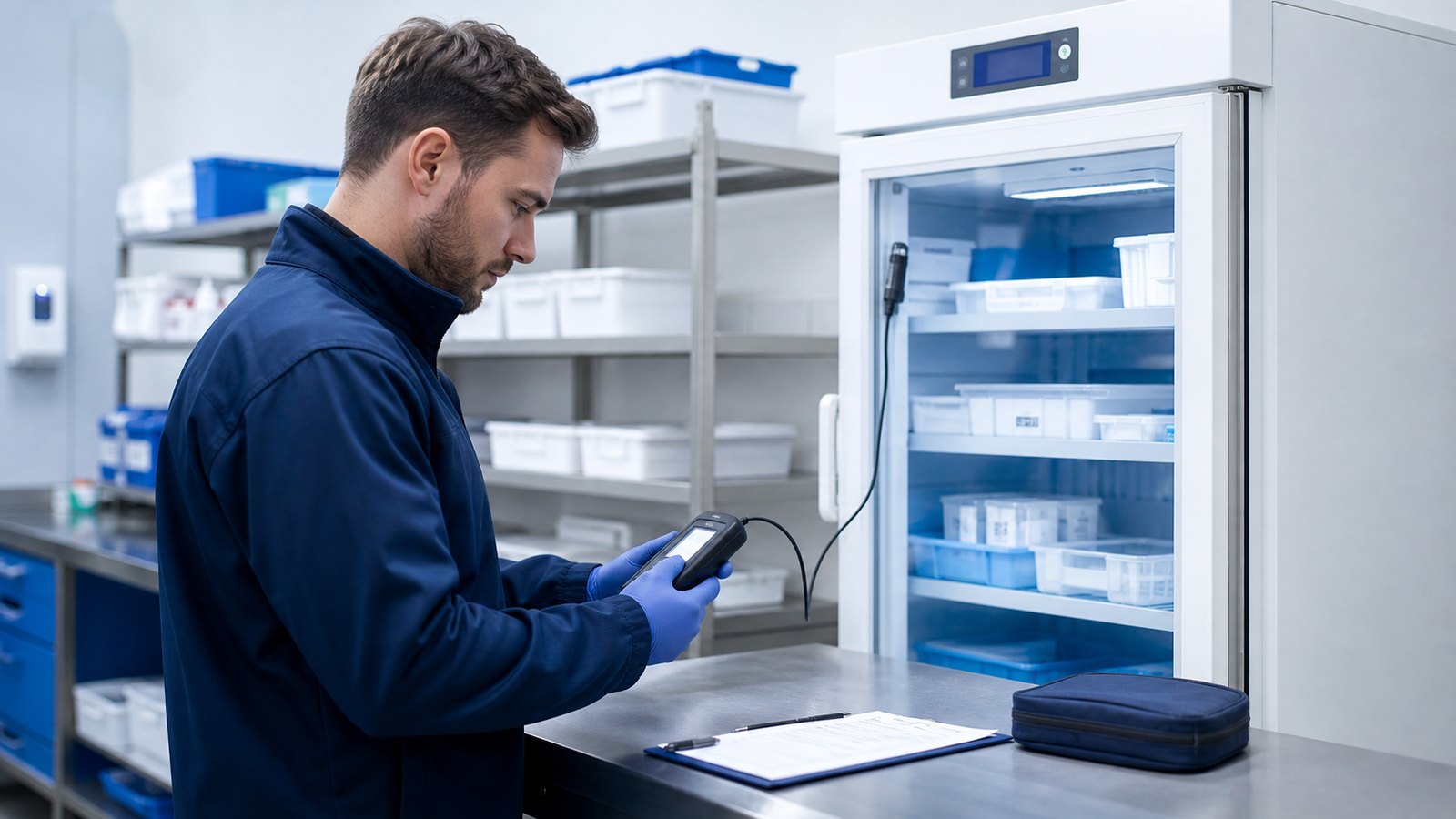
Start with the cold-chain facts
For vaccine storage, record the current temperature, min/max readings, alarm message, logger status and when the issue started. Keep following the site's cold-chain procedure while calling for repair triage.
When temperature control becomes a repair issue
An alarm, unstable temperature, slow recovery or repeated excursion can point to a refrigeration or monitoring fault. The first call separates an urgent equipment problem from calibration, maintenance or a site-procedure issue.
Keep repair and stock decisions separate
A technician can diagnose refrigeration behaviour, but the site's cold-chain policy controls vaccine handling decisions. Keep following the clinical or pharmacy procedure while the equipment fault is assessed.
Repair, calibration or maintenance
Some calls are urgent repair calls. Others point to calibration, planned service, recurring monitoring issues or a temperature excursion response. The first call should separate equipment fault, monitoring issue and stock-risk process.
Cold-chain questions
Does ClubCold repair vaccine fridges in Sydney?
Yes. ClubCold handles vaccine fridge repair and triage enquiries for commercial medical cold-chain sites in Sydney.
What temperature range matters for vaccine fridges?
The Strive for 5 guidance centres vaccine storage on +2C to +8C, with +5C as the target. Follow your site's cold-chain procedure for stock decisions.
What should a pharmacy record before calling?
Record the current temperature, min/max readings, alarm, logger status, door or power issue and when the problem began.
Is this the same as vaccine fridge calibration?
No. Repair is for a fault or unstable temperature. Calibration checks measurement accuracy and performance pathways for scheduled cold-chain confidence.
Can ClubCold advise whether vaccines are usable?
No. Stock-use decisions must follow the site's clinical, pharmacy or cold-chain procedure. ClubCold can help with equipment diagnosis and repair triage.