
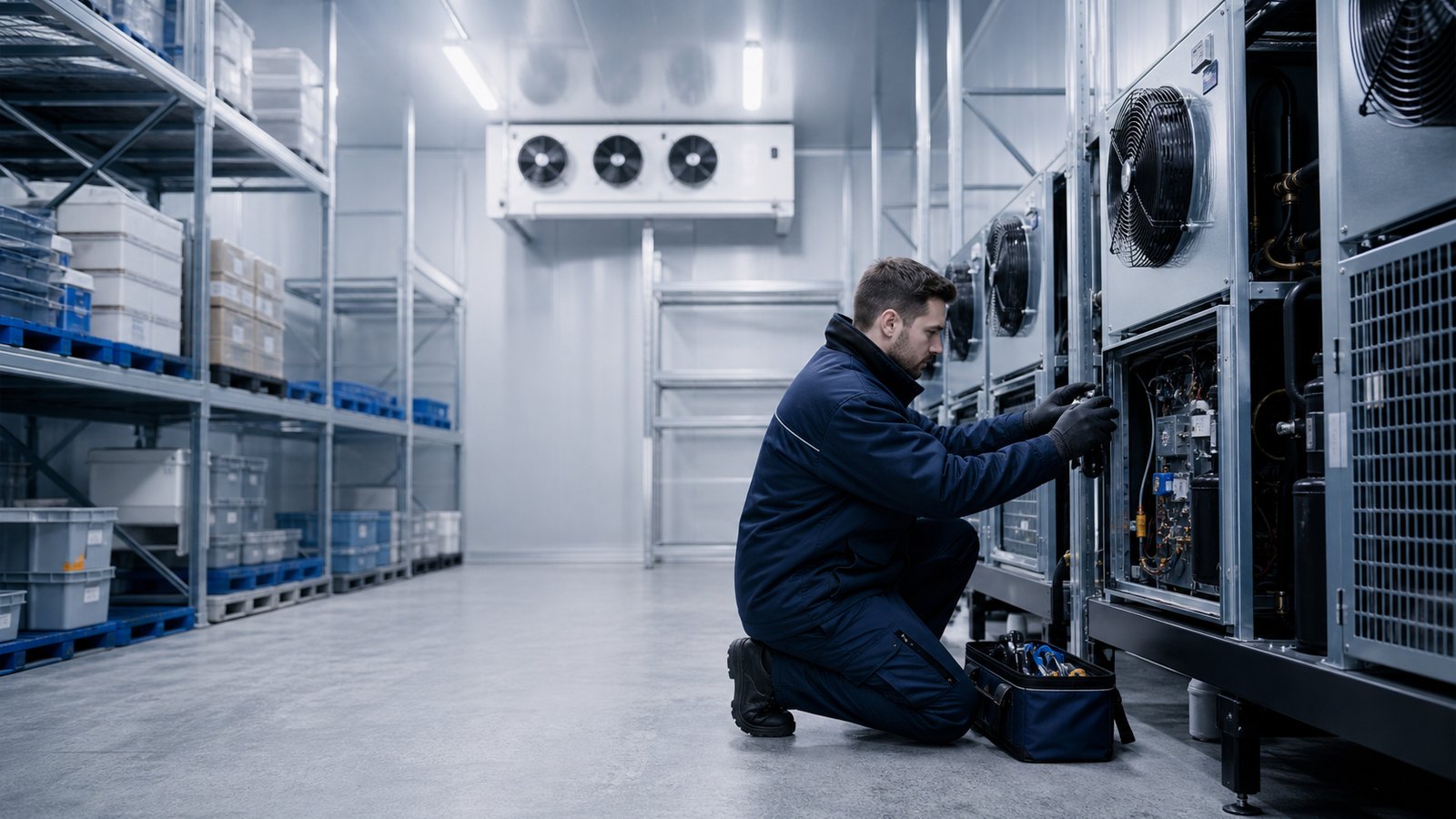
Start with what changed
A walk-in freezer may stop freezing because of air leaks, defrost faults, blocked airflow, fan issues, controller problems, refrigerant faults, drain issues or heavy site load. Record the symptom before changing settings.
Safe checks that help
Check whether the door closes cleanly, whether vents are blocked by stock, whether fans sound different, whether ice is building up and whether staff recently loaded warm product or had a power interruption.
- Door closes and seals
- No blocked airflow
- Visible alarm photo
- Ice location
- Current and normal temperature
When to call immediately
Call if temperature is rising, frozen stock is softening, the room is alarming, ice is blocking airflow or the fault returned after a reset. Waiting can turn a repair into stock loss.
Why repeated resets are a bad bet
Repeated resets can hide fault history without fixing the cause. A technician needs the pattern: temperature trend, alarm, ice, door behaviour, loading and timing.
Common questions
Why is my walk-in freezer not freezing?
Common causes include door seal leaks, defrost faults, blocked airflow, fan issues, controller problems, drain problems, refrigerant faults, heavy loading or site power issues.
Should I turn the freezer off and on again?
Avoid repeated resets. Photograph alarms, note the temperature and call if stock is at risk or the fault has returned.
Can ice build-up stop a freezer from freezing?
Yes. Ice can block airflow and point to defrost, door, drain or controller problems that need proper diagnosis.
What information should I give ClubCold?
Give the suburb, current temperature, stock risk, alarm or fault code, ice pattern, door condition and how long the room has been struggling.
Can maintenance prevent this?
Maintenance helps catch seals, drains, condenser load, airflow and controller issues, but urgent faults still need prompt triage.
Is this for home freezers?
No. This guide is for commercial walk-in freezer rooms and business cold storage.